


Emergency
- Presentation
- Healthcare services
- Team
- About diseases or procedures
- Research
- Teaching
- Contact
Codi servei:
Recerca:
The Adult Emergency Department of Germans Trias i Pujol University Hospital maintains a well-established scientific output in the field of hospital emergency medicine, with a clear commitment to applied research, early disease detection and the continuous improvement of care processes.
During 2024–2025, the service has led and participated in several multicentre studies, among which the VIHgila study stands out, aimed at detecting occult HIV in the emergency department. This project, which includes an analysis of gender bias in the ordering of serological tests, is in the process of publishing its results.
Also notable is the renewal of the FOCUS (Gilead) grant for the systematic detection of HIV and HCV, with an upcoming expansion to VHB.
Currently, the department is leading a study on the creation of a step-down unit within the emergency department and is participating in a randomised clinical trial on the impact of the ‘1-hour sepsis bundle’ on in-hospital mortality, which is pending publication.
By 2025, the Emergency Department professionals will have published 5 international articles in indexed journals, presented more than 20 scientific papers at national congresses (SEMES, SoCMUE), and two doctoral theses will be in progress.
This commitment to research also translates into continuing professional development and knowledge transfer, with a prominent role in the innovation of clinical pathways (such as those for chest pain or reverse referral) and in early detection projects with a public health impact.
Presentation:
The Adult Emergency Department of Hospital Germans Trias i Pujol is part of the Territorial Clinical Directorate for urgent care. The department provides immediate healthcare to people presenting with acute or decompensated chronic conditions that require urgent or emergency medical attention. The service operates 24 hours a day, 365 days a year. In the “How does A&E work?” section, you can find practical information and an explanatory video.
The service is a referral centre for the Barcelonès Nord and Maresme areas and also attends patients from other regions in cases requiring highly specialised care, typical of a tertiary care centre. With a high level of clinical activity and a constant commitment to quality improvement, the Adults' A&E department at Hospital Germans Trias i Pujol aims to provide prompt, safe and compassionate care, always placing the patient at the centre of its healthcare provision.
The mission of the department, in line with that of the Hospital, is to provide comprehensive, high-quality healthcare in response to the urgent care needs of adult patients, based on their severity, ensuring an appropriate diagnostic direction and treatment with an approach based on clinical prioritisation, patient safety and hospital resources. Furthermore, the SU carries out teaching and research activities aimed at improving clinical practice.
It is organised into different functional areas: triage, low-complexity consultations, critical care cubicles, an observation area and specific areas according to the type of pathology. This organisation allows for the management of cases ranging from minor to life-threatening situations, ensuring a rapid and efficient response for every patient.
The service's multidisciplinary team collaborates continuously with other hospital departments, such as Internal Medicine, Cardiology, Neurology, General Surgery, and Psychiatry, among others.
The Territorial Clinical Directorate for urgent care allows for efficient coordination between the Emergency Department at Germans Trias and the rest of the devices in the territory (Primary Care Urgent Centres, Primary Care, Emergency Medical Services and other hospitals), ensuring continuous, coordinated and safe care for patients.
The Emergency Department also has a teaching and research component, being part of the university network linked to the Faculty of Medicine at UAB. It hosts resident doctors and nurses and collaborates in the practical training of undergraduate students. In addition, it participates in research projects related to healthcare organisation, clinical safety, flow management and the care of chronic conditions.
► You can view the urgent care pathway information in this document.
Highlights from the Emergency Department at Germans Trias Hospital
- Germans Trias Hospital performs, for the first time in Europe, emergency robotic surgery with immersive remote supervision
- The Emergency Department launches Advanced Nursing Triage
- Patient satisfaction grows among those hospitalised or treated in the Emergency Department of Germans Trias Hospital
Tipus Servei: 7
Correu: urgencies.germanstrias@gencat.cat / urgencies2.germanstrias@gencat.cat
Docència:
Undergraduate teaching
The Emergency Department is actively involved in the training of undergraduate Medicine students from the Autonomous University of Barcelona (UAB), providing both theoretical and practical teaching on modules related to emergency care.
- Elective credits: This consists of a rotation through the Emergency Department as an elective activity. It is a primarily practical rotation through the different sections of the department, under the supervision of a medical team that includes at least one consultant or a senior registrar.
- Emergency Medicine Module: This is an elective module, taught in the sixth year. It is a semester-long course and its main objectives are to familiarise students with the different care settings in urgent care (out-of-hospital and in-hospital) and to achieve the ability to act quickly, methodically and effectively in various emergency situations.
Postgraduate teaching
The Adult Emergency Department offers structured and cross-cutting postgraduate training, aimed at residents from multiple medical and surgical specialities. The department hosts residents from General Practice, Internal Medicine, Cardiology, Geriatrics, Neurology, Anaesthesiology and other specialities, offering a real immersion in the urgent care of a tertiary care hospital.
One of the most notable teaching initiatives is the course ‘Update on Urgent Hospital Care’, aimed at first-year residents (R1). This course aims to facilitate their integration into the department, providing practical tools and consistent guidelines for managing the most common urgent syndromes, thereby improving clinical safety and enhancing teamwork. The methodology combines theoretical-practical sessions with workshops and communication skills training.
The service also makes available to residents the Urgent Manual of Hospital Germans Trias, developed by the medical team in collaboration with specialists from other hospital departments. This practical and accessible tool compiles up-to-date protocols, clinical guidelines and decision-making algorithms for the management of urgent conditions, and has become a reference for healthcare professionals in training.
► Information for residents
- Accredited places: The approval of the Emergency Medicine specialty, published in the Official State Gazette (BOE) on Wednesday 3 July 2024, in accordance with Royal Decree 610/2024, represents a historic milestone. In 2026, the Emergency Department will, for the first time, welcome a resident from the Emergency Medicine specialty. This represents a significant step in consolidating the service as a teaching environment and entails the need to develop and implement the specific training plan for first-year residents, in accordance with the criteria and competencies established by the specialty.
- Furthermore, the department currently offers rotation places for residents from various specialities, with the number varying by year.
- Post-residency recruitment: A significant proportion of the residents who have rotated through the department have subsequently been employed in the hospital's care provision.
- Shifts and rotations: Integrated from the first year, with direct supervision and access to training in specific areas such as clinical ultrasound and critical care management.
- Consult the teaching guide (available soon).
Continuing Education
The Adult Emergency Department of the Germans Trias i Pujol University Hospital has a strong commitment to the continuing education of its professionals. This training is key to ensuring safe, up-to-date care that is aligned with the service's real needs, in an increasingly complex and specialised environment.
The training programme is designed to meet the needs of both new staff joining the department and those of established teams. It includes training in technical skills, clinical knowledge, care pathways and transferable skills such as communication and interdisciplinary teamwork.
One of the service's main methodological lines is clinical simulation, integrated into the teaching plan as a fundamental tool for safe practice. Through theoretical sessions, digital content and realistic simulation scenarios, professionals can practise critical situations and reinforce decision-making in high-pressure contexts.
Continuing professional development also includes specific activities in areas such as bedside clinical ultrasound, critical patient management, non-invasive ventilation, and the management of complex geriatric cases. This training is periodically reviewed and updated to adapt to scientific advances and the evolving needs of patient care.
This commitment to teaching not only contributes to improving the quality of care, but also fosters a safe, cohesive and motivating working environment for the service's medical and nursing teams.
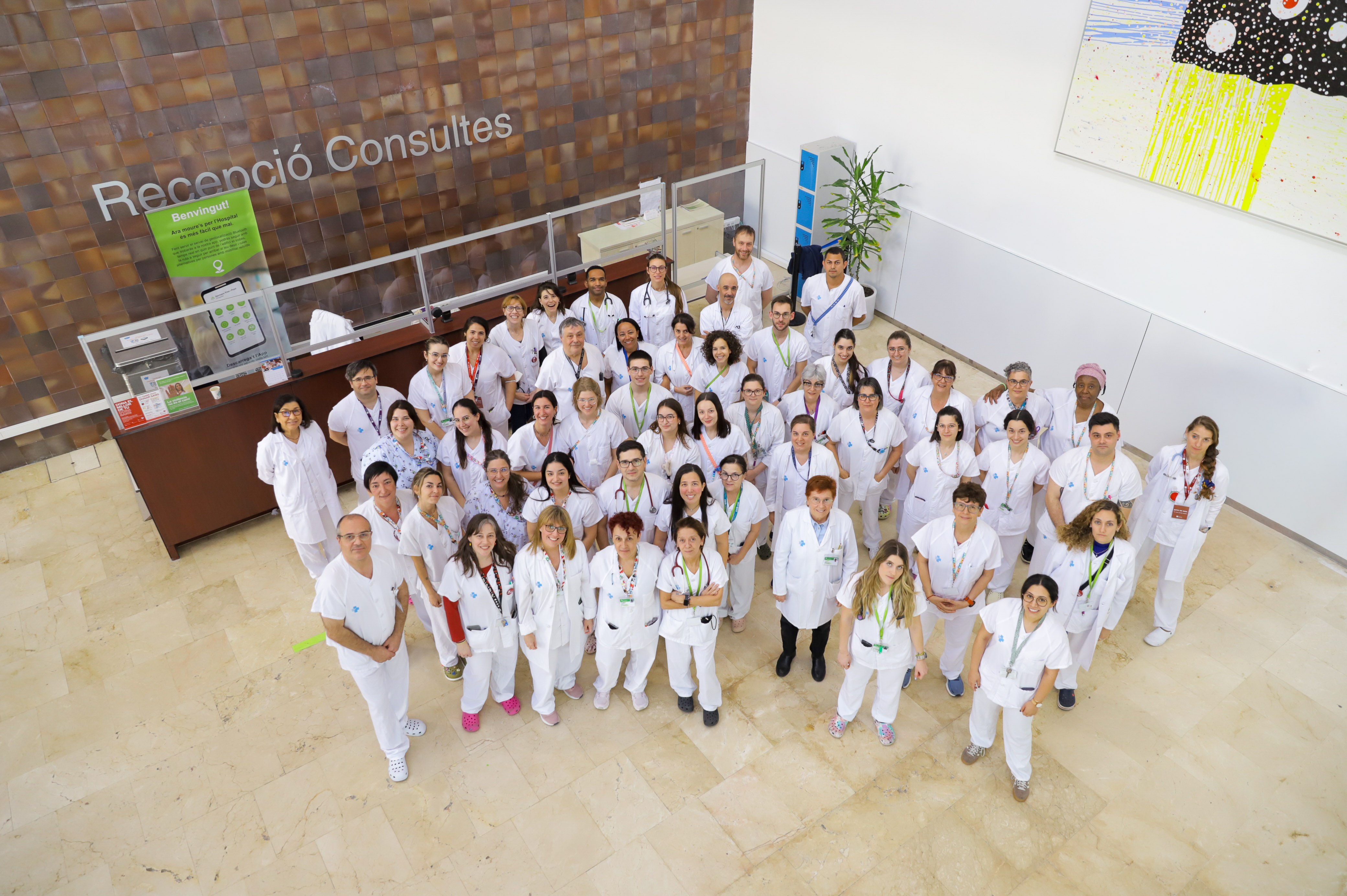
Medical team
Anna Carreres Molas
Clinical Director of Urgent Care. Specialist in Pulmonology
Antonia Segura Egea
Head of the Emergency Medicine Department. Specialist in Internal Medicine
Maria Jesús Domínguez Tordable
Section Head. Specialist in Internal Medicine
Neus Robert Boter
Head of Section. Specialist in Family and Community Medicine
Javier Beltran Bayas
A&E Doctor
Sandy Brazoban Paredes
A&E Doctor
Davide Bernaudo
Specialist in Internal Medicine
Marc Bosch Fabregas
Specialist in Family and Community Medicine
Montserrat Costa Mena
Specialist. Family and Community Medicine
Mª Vanessa de Dios Benito
Specialist. Clinical Pharmacology
Carla Díaz Cerrada
Specialist. Family and Community Medicine
Amarylis Dominguez Torres
A&E Doctor
Alba García Delgado
Specialist. Family and Community Medicine
Marina Garcia Giralda
Specialist Registrar in General Practice
Laura Grimal Abejez
Specialist Registrar in General Practice
Mª Dolores López Lajarín
Specialist Registrar in General Practice
Rafael López Urreste
A&E Doctor
Alba Lordan Carrillo
Specialist Registrar in General Practice
Laura Alejandra Marquez Hernández
A&E Doctor
Natalia Martínez Rodríguez
Consultant in General Practice
Yaiza Mata Naval
Consultant in General Practice
Rebeca Mier Vaca
Consultant in General Practice
Yohander Nordelo Fernández
A&E Doctor
Mª del Mar Rosas García
Emergency Doctor
Stephanie Saley
Emergency Doctor
Iria Sanlés Gutiérrez
Consultant. Internal Medicine
Judith Serrat Muñoz
Consultant. General Practice
Yailin Tabares Meléndez
Emergency Doctor
Miguel Vera Adorno
Emergency Doctor
Pablo Balcazar Ortiz
Consultant. Rehabilitation
Roger Homs
Consultant. General and Digestive Surgery
Enrico Marrano
Consultant. General and Digestive Surgery
Gian Pier Protti Ruiz
Consultant. General and Digestive Surgery
Ana Maria Piqueras Hinojo
Consultant. General and Digestive Surgery
Carlos Antonio Umanes González
Emergency Doctor
Nursing Team
- Assistant to the Nursing Director
Lluïsa Garcia Vidal
- Nursing Supervisors
Flora Aceituno Castillo
Marta Samaranch Gusi
- Nurses
Chantal Abadia Ruiz
Arantxa Aguilar Muñoz
Noah Aguilera Basanta
Pilar Alcario Rodriguez
Rubén Alfonso Grande
Abilia Alonso Garcia
Javier Álvarez Galisteo
Ivan Ruiz Martínez
Sonia Quintana Colomé
Sofía Amarilla Navarro
Nuria Ambrock Alegri
Alba Aranda Sanchez
Carlos Arjona Lucena
Izaskun Azcarate Sorbet
Judit Beneitez Vaquero
Ainhoa Benitez Corchero
Sonia Caballero Tienda
Monica Camacho Jimenez
Daniel Candelera Lallave
Marta Cantera Pesquera
Marc Chamorro Pedra
Mariona Coll Pla
Sheila David González
David De Dios Miranda
Manuela De Toro Luengo
Núria Delgado Plana
Naira Díaz García
Cristina Díez Martin
David Doral Morena
María Dote Luengo
Lucia Escoriza Domínguez
Estela Fernández Bejar
Helena Fernández Bernal
Anna Fernàndez Moreno
Anna Ferrer Gispert
Begoña Flores Aguilera
Sandra Fortuna López
Lorena Frochoso Casado
Belén Galdeano Agulló
Araceli Galera Cabrera
Cristina Gallego Regalon
Sandra Gálvez Elena
Yolanda Gálvez Duwison
Raquel Gamiz Rubio
Anna Garbayo Wyneken
Yolanda Gimenez Cerezo
Marina Gonzales Romero
Daniel González Pera
Verónica Gonzalo Bachiller
Carla Grajal Lara
Marina Herrera Sánchez
Laura Jaramillo Fernàndez
Adrià Jiménez Morales
Jorge de Jorge Gabarrón
Ana Lacunza González
Ana Ladero Rubio
Nerea Llobregat Camarero
Marta Lopez Salichs
Isabel López López
Cristina Losa Llorente
Sonia Manzanares Mateo
Maria Marat Gallart
Araceli Marmol Gil
Paula Martin Salas
Raúl Martínez Izquierdo
Vanesa Martínez Guillen
Marina Martínez Bernardo
Helena Martínez Abad
Sandra Mateos Guijosa
Elisenda Mayans Riera
Carolina Melero Aznar
Sandra Merino Andreu
Irene Mico Bures
María Mochon Gonzalez
Presentación Moruno Pérez
Olga Nuez Lamata
Marta Olive Gómez
Ariadna Ortegón Pou
Miguel Angel Ortiz Sorroche
Andreu Pagès Valero
Irene Pedreira Robles
Iris Perna Siurana
Cristina Piedras Moreno
Esther Pinilla Iglesias
Marc Planet Pujol
Gleciane Policarpo De Carvalho
Cristina Prieto Gómez
Marta Pueo Delgado
Sonia Quintana Colomer
Araceli Robas Muñoz
Mariola Rodriguez Fuertes
Laura Romero Garcia
Alberto Rueda Romero
Yolanda Ruiz Casado
Ivan Ruiz Martinez
Mireia Saenz Messeguer
Mercedes Sala Chimenos
Laura Salavera Cabrera
Pilar Salgado De la Iglesia
Vanesa Sánchez Romero
Desiree Sech Abadias
Marta Segura Servent
Paula Segura i Bou
Aida Serrano Moreno
Eric Serrano Campano
Enia Soler Diaz
Adrià Toledo Fernandez
Oriol Tomàs Roges
Iolanda Trenzado Gracia
Estela Uson Rius
Sofía Vidal-Ribas Lorenzo
Antonio Vidal Moles
Berta Vila Pérez
Samuel Villodres Martínez
- Healthcare Assistants
Arantxa Aguilar Muñoz
Laila Bando El emrani
Bárbara Aguilera Cano
Brisa Aguilera Jose
Miguel Angel Arias Martínez
Jebran Bando el Emrani
Silvia Gordo Gómez
Pilar Begue Pereira
Geraldin Quintero Gallego
Eli Ortiz Méndez
Montse Garcia Rigol
Aida Laguna Cervantes
Roger Ber Bel
Álex Díaz González
Naiara Benítez Moral
Georgina Borras Joaquina
Ainhoa Burgos Domínguez
Lorena Cabas Moreno
Aroa Peña Herrera
Montse Peña Herrera
Patricia Caballero Rodriguez
Ana Socosote Erimo
Didac Fernández Recio
Ainhoa Cortés Melendez
Rosa García Randeiro
Rosario Garriga Álvarez
Alejandro Gómez Romero
Sara Lastra Martínez
Ignacio Marron Flores
Jesús Martínez Matamoros
Laura Medina Sánchez
Alex Medran Vela
Verónica Flores Ramón
Míriam Molina Luna
Diego Morales Martínez
Andrea Moya Castell
Isaac Muñoz García
Maria Pardo López
Mar Montero Lopez
Andrea Pozo Berbel
Jasmina Pradas Tomas
Marta Millán Rodríguez
Sonia Ruiz Lièbana
Marta Serrano Nogueras
Alberto Jose Oviedo
Jose Ruiz Presumido
Alba Vallejo Antolin
Lidia Tolves Gonzalez
Joan Pérez Solves
Naisa Diaz
Charo Yuste Valle
Jose Zambrano Rosado
- Porters
Luis Jorge Abejez García
Arianne Albuja Rodríguez
Dolores Álvarez Blanco
David Cornelles Martínez
Jesús Ara Domínguez
Lourdes Fajardo Medina
Verónica Barrera Sánchez
Julio Barroso González
Amalia Caballero Invernon
Carmelo Cebrián Carrique
Cristina Cepas Caraballo
Rebeca García Cano
Héctor García Ferreiro
Luis García García
Paula García Rodríguez
Jose Luis Gascón Olit
Manuel Gavilan Calzado
Antonio González Navarro
Jordi López Prieto
Laia Marin Varo
Mª Emèrita Martínez Sánchez
Verónica Montoya Varo
Nuria Navarro Reverter
María Ortega Villena
Adrián Patricio Rodríguez
Juan Portas Bertran
Albert Puig Roldan
Cristian Redondo Solsona
Samy Renteria Perea
Alberto Romero Pou
Deseada Ruiz Amador
Mª José Salguero Sanabria
Paula Sánchez Campaner
Administrative Team
- Emergency Coordination
Maria Berglund Aragó
Tania Bruno García
Yesica Lorenzo Pérez
Sonia Pérez Páez
- Emergency Admissions
Martina Adell Valentí
Alex Álvarez Merino
Roberto Artero Collados
Alex Cordero Huertas
Francisco García Martin
Cristian García Rodríguez
Mireia Griñan Munuera
Maria Guimerà Puig
Merche Hinojosa Justo
Lidia Huertas Bujaldon
Sergio Juárez Marín
Pol Manozzo Hernández
Joshua Martínez Salazar
Ignacio Martínez Sevilla
Joana Mas Villegas
Sara Mendavia Colominas
Alejandro Montserrat Reche
Ainara Odriozola Perez
Pablo Paramo Martin
Josep Antoni Parejo Martinez
Cristina Poza Junyent
Aitor Santamaría Andreu
Facilitation Team
Rafaela Aguilar Martín
Faiza Allouss
Héctor Garcia Martínez
Natalia González Montero
Marta Roig Sobrino
Pharmaceutical Team
Alba Martin Val
Lidia Estrada
Sergio Marín
Social Work Team
Anna Silva
The Adult Emergency Department of Hospital Germans Trias i Pujol is part of the Territorial Clinical Directorate for urgent care. The department provides immediate healthcare to people presenting with acute or decompensated chronic conditions that require urgent or emergency medical attention. The service operates 24 hours a day, 365 days a year. In the “How does A&E work?” section, you can find practical information and an explanatory video.
The service is a referral centre for the Barcelonès Nord and Maresme areas and also attends patients from other regions in cases requiring highly specialised care, typical of a tertiary care centre. With a high level of clinical activity and a constant commitment to quality improvement, the Adults' A&E department at Hospital Germans Trias i Pujol aims to provide prompt, safe and compassionate care, always placing the patient at the centre of its healthcare provision.
The mission of the department, in line with that of the Hospital, is to provide comprehensive, high-quality healthcare in response to the urgent care needs of adult patients, based on their severity, ensuring an appropriate diagnostic direction and treatment with an approach based on clinical prioritisation, patient safety and hospital resources. Furthermore, the SU carries out teaching and research activities aimed at improving clinical practice.
It is organised into different functional areas: triage, low-complexity consultations, critical care cubicles, an observation area and specific areas according to the type of pathology. This organisation allows for the management of cases ranging from minor to life-threatening situations, ensuring a rapid and efficient response for every patient.
The service's multidisciplinary team collaborates continuously with other hospital departments, such as Internal Medicine, Cardiology, Neurology, General Surgery, and Psychiatry, among others.
The Territorial Clinical Directorate for urgent care allows for efficient coordination between the Emergency Department at Germans Trias and the rest of the devices in the territory (Primary Care Urgent Centres, Primary Care, Emergency Medical Services and other hospitals), ensuring continuous, coordinated and safe care for patients.
The Emergency Department also has a teaching and research component, being part of the university network linked to the Faculty of Medicine at UAB. It hosts resident doctors and nurses and collaborates in the practical training of undergraduate students. In addition, it participates in research projects related to healthcare organisation, clinical safety, flow management and the care of chronic conditions.
► You can view the urgent care pathway information in this document.
Highlights from the Emergency Department at Germans Trias Hospital
- Germans Trias Hospital performs, for the first time in Europe, emergency robotic surgery with immersive remote supervision
- The Emergency Department launches Advanced Nursing Triage
- Patient satisfaction grows among those hospitalised or treated in the Emergency Department of Germans Trias Hospital
Structured triage
Classification of patients according to clinical severity (levels I to V), to ensure equity, prioritisation and patient safety.
Vital emergency care
Immediate intervention in life-threatening situations, cardiac arrest, shock, polytrauma and other critical conditions, with access to high-complexity technology and activable protocols (Code activation: Stroke, MI, Sepsis, Polytrauma).
Emergency diagnostic procedures
Electrocardiogram, ultrasound scans, blood gas analysis, urgent laboratory tests, CT scans, MRI scans, endoscopies, catheterisations and other supplementary tests available 24 hours a day.
Emergency Sub-Critical Care
A dedicated area for patients requiring monitoring (6–24 hours), clinical stabilisation, and diagnostic and therapeutic guidance.
Specialist care pathways
Integrated care for patients at psychiatric risk, geriatric, frail, requiring palliative or end-of-life care, among others.
Urgent psychiatric care
Intervention in cases of crisis, risk of self-harm or behavioural disturbances. Coordination with the Mental Health Team.
Care for intoxication and overdose
Diagnosis and treatment in situations of acute substance use, overdose or toxin poisoning, with access to antivenoms and specialised support.
Therapeutic care and procedures
From immobilisations, suturing, bandaging and non-invasive ventilation, to highly complex techniques such as thoracic drains, pacemakers or endovascular treatments. Emergency surgical procedures.
Activable Emergency Protocols (Codes)
Implementation of activable emergency codes: Stroke Code, MI (Heart Attack) Code, Polytrauma Code, Sepsis Code, Agitation Code, in accordance with CatSalut guidelines.
Palliative and end-of-life care
Comprehensive care for patients at the end of life, with a multidisciplinary approach and therapeutic management tailored to their values and wishes.
Specific referral pathways
Direct access to the Home Hospitalisation Unit (UHAD), Primary Care Urgent Centres (CUAP), hospital units, day hospital services or other facilities as required by clinical need.
Public health case detection
Specific protocols in cases of suspected mistreatment, abuse, transmissible infectious diseases or mass poisonings.
Organ and tissue donation
Collaboration with transplant coordination in cases of donation on brain death, controlled asystole or tissue donation, according to established criteria.
Comprehensive geriatric assessment procedures
Early detection of frailty, risk of delirium and functional or social support needs in elderly patients.
Multiple victim and disaster response
Protocol-driven response to incidents with multiple victims, activation of the Disaster Plan and coordination with external emergency services.
24/7 clinical coordination with specialist departments
Continuous on-site presence of multiple specialist departments (internal medicine, surgery, oncology, cardiology, nephrology, psychiatry, radiology, etc.) and locatable access to other services such as neurointervention, haemodynamics or transplant services.
Relationship with day hospitals and external facilities
Joint referral and follow-up with day hospitals (general, oncology, infectious diseases, endocrinology...), social work and patient support units.
► In this document, you can find out more about the Emergency Department's service portfolio.
Specialised care for emergency codes
- Stroke Code: Germans Trias is the regional referral centre for stroke care. It coordinates the pre-hospital and in-hospital pathway, offering treatments such as intravenous thrombolysis and endovascular therapy. In addition, it provides telestroke support to other hospitals, facilitating the rapid initiation of treatment outside the neurologist's on-site hours.
- Heart Attack Code: Germans Trias has protocols for the urgent care of acute myocardial infarction, including a dedicated haemodynamics laboratory for emergency catheterisations.
- Polytrauma Code: As a tertiary centre, the hospital is prepared to treat patients with severe polytrauma, offering multidisciplinary care and advanced resources for managing such cases.
- Sepsis Code: An urgent action protocol activated when signs of a serious infection that could endanger the patient's life are detected. It enables a rapid and coordinated response from healthcare professionals to initiate diagnosis and treatment immediately, with the aim of reducing complications, improving prognosis and saving lives.
Emergency surgery with robotic technology
Point-of-care clinical ultrasound (POCUS)
Acute heart failure
Care for frail geriatric patients
The Adult Emergency Department of Germans Trias i Pujol University Hospital maintains a well-established scientific output in the field of hospital emergency medicine, with a clear commitment to applied research, early disease detection and the continuous improvement of care processes.
During 2024–2025, the service has led and participated in several multicentre studies, among which the VIHgila study stands out, aimed at detecting occult HIV in the emergency department. This project, which includes an analysis of gender bias in the ordering of serological tests, is in the process of publishing its results.
Also notable is the renewal of the FOCUS (Gilead) grant for the systematic detection of HIV and HCV, with an upcoming expansion to VHB.
Currently, the department is leading a study on the creation of a step-down unit within the emergency department and is participating in a randomised clinical trial on the impact of the ‘1-hour sepsis bundle’ on in-hospital mortality, which is pending publication.
By 2025, the Emergency Department professionals will have published 5 international articles in indexed journals, presented more than 20 scientific papers at national congresses (SEMES, SoCMUE), and two doctoral theses will be in progress.
This commitment to research also translates into continuing professional development and knowledge transfer, with a prominent role in the innovation of clinical pathways (such as those for chest pain or reverse referral) and in early detection projects with a public health impact.
Undergraduate teaching
The Emergency Department is actively involved in the training of undergraduate Medicine students from the Autonomous University of Barcelona (UAB), providing both theoretical and practical teaching on modules related to emergency care.
- Elective credits: This consists of a rotation through the Emergency Department as an elective activity. It is a primarily practical rotation through the different sections of the department, under the supervision of a medical team that includes at least one consultant or a senior registrar.
- Emergency Medicine Module: This is an elective module, taught in the sixth year. It is a semester-long course and its main objectives are to familiarise students with the different care settings in urgent care (out-of-hospital and in-hospital) and to achieve the ability to act quickly, methodically and effectively in various emergency situations.
Postgraduate teaching
The Adult Emergency Department offers structured and cross-cutting postgraduate training, aimed at residents from multiple medical and surgical specialities. The department hosts residents from General Practice, Internal Medicine, Cardiology, Geriatrics, Neurology, Anaesthesiology and other specialities, offering a real immersion in the urgent care of a tertiary care hospital.
One of the most notable teaching initiatives is the course ‘Update on Urgent Hospital Care’, aimed at first-year residents (R1). This course aims to facilitate their integration into the department, providing practical tools and consistent guidelines for managing the most common urgent syndromes, thereby improving clinical safety and enhancing teamwork. The methodology combines theoretical-practical sessions with workshops and communication skills training.
The service also makes available to residents the Urgent Manual of Hospital Germans Trias, developed by the medical team in collaboration with specialists from other hospital departments. This practical and accessible tool compiles up-to-date protocols, clinical guidelines and decision-making algorithms for the management of urgent conditions, and has become a reference for healthcare professionals in training.
► Information for residents
- Accredited places: The approval of the Emergency Medicine specialty, published in the Official State Gazette (BOE) on Wednesday 3 July 2024, in accordance with Royal Decree 610/2024, represents a historic milestone. In 2026, the Emergency Department will, for the first time, welcome a resident from the Emergency Medicine specialty. This represents a significant step in consolidating the service as a teaching environment and entails the need to develop and implement the specific training plan for first-year residents, in accordance with the criteria and competencies established by the specialty.
- Furthermore, the department currently offers rotation places for residents from various specialities, with the number varying by year.
- Post-residency recruitment: A significant proportion of the residents who have rotated through the department have subsequently been employed in the hospital's care provision.
- Shifts and rotations: Integrated from the first year, with direct supervision and access to training in specific areas such as clinical ultrasound and critical care management.
- Consult the teaching guide (available soon).
Continuing Education
The Adult Emergency Department of the Germans Trias i Pujol University Hospital has a strong commitment to the continuing education of its professionals. This training is key to ensuring safe, up-to-date care that is aligned with the service's real needs, in an increasingly complex and specialised environment.
The training programme is designed to meet the needs of both new staff joining the department and those of established teams. It includes training in technical skills, clinical knowledge, care pathways and transferable skills such as communication and interdisciplinary teamwork.
One of the service's main methodological lines is clinical simulation, integrated into the teaching plan as a fundamental tool for safe practice. Through theoretical sessions, digital content and realistic simulation scenarios, professionals can practise critical situations and reinforce decision-making in high-pressure contexts.
Continuing professional development also includes specific activities in areas such as bedside clinical ultrasound, critical patient management, non-invasive ventilation, and the management of complex geriatric cases. This training is periodically reviewed and updated to adapt to scientific advances and the evolving needs of patient care.
This commitment to teaching not only contributes to improving the quality of care, but also fosters a safe, cohesive and motivating working environment for the service's medical and nursing teams.
Contacte: urgencies.germanstrias@gencat.cat / urgencies2.germanstrias@gencat.cat