


Domiciliary Hospitalization
- Presentation
- Healthcare services
- Team
- About diseases or procedures
- Research
- Teaching
- Contact
Codi servei:
Recerca:
The Home Hospitalisation Service at Germans Trias conducts extensive research and innovation aimed at evaluating the clinical outcomes of the care model, driving the digital transformation of home care, and incorporating new technologies to improve the quality, safety and efficiency of care.
Research is carried out in collaboration with professionals and institutions in the Can Ruti area, as well as with other hospitals and scientific societies at a national and international level.
Main research lines
The service participates in several research and innovation projects focused on:
- The validation of remote monitoring systems for in-home patients.
- The development of telemedicine tools applied to home hospitalisation.
- The evaluation of the clinical outcomes and cost-effectiveness of the care model.
- The incorporation of remote biometrics and data intelligence to improve patient monitoring.
- The care of patients with complex health needs in the home setting.
Projects in development
Projects currently in development include:
- Project SESHAT, funded by European funds, focused on the remote monitoring of inpatients at home using biometrics and on identifying predictive factors through data analysis.
- The REHOCA project, aimed at validating a remote monitoring device developed in collaboration with the Hospital's Innovation Directorate and the company ONALABS.
- Development of the eSalut platform, with the aim of expanding the use of telemedicine in home care.
- Study on the costs and efficiency of hospitalisation at home, linked to a doctoral thesis.
- Participation in the DOMICOM project, promoted by the Spanish Society of Hospitalisation at Home (SEHAD) and the Spanish Society of Internal Medicine (SEMI), focused on the care of patients with complex needs.
Scientific outputs
The unit's professionals continuously participate in multicentre studies and publish the results of their research in high-impact scientific journals, both nationally and internationally. Recent publications include papers on the digital transformation of home hospitalisation, the treatment of COVID-19, outpatient surgery with home follow-up, digestive endoscopy, and the economic evaluation of new care models.
Service's featured publications:
- Alemany A, Balanza N, Millat-Martinez P, Ouchi D, Corbacho-Monné M, Morales-Indiano C, Fernández Rivas G, Blanco I, Mitjà O, Aguilar R, Dobaño C, Bassat Q, Moncunill G, Baro B; COnV-ert BMK STUDY GROUP. Prognostic performance of early immune and endothelial activation markers in mild-to-moderate COVID-19 outpatients: a nested case-control study. Front Immunol. 2024 Nov 27;15:1501872. doi: 10.3389/fimmu.2024.1501872. PMID: 39664394; PMCID: PMC11631913.
- Anna Calm, Andrea Avella , Sofía Dall'Oglio , Raquel Muñoz-González , Maria Gloria Bonet, Claudia Thatiana Vertiz , Mónica Rodríguez , Adria Escudero , Enrique Moret , Anna Pèlach , Luis Wong , Eugeni Domènech , Vicente Moreno , Ingrid Marín , Hugo Uchima . Evaluation of adverse events following endoscopic peroral myotomy (POEM) for achalasia ‒ Implications for feasibility of same-day discharge Rev Esp Enferm Dig.2025 sep 29. DOI: 10.17235/reed.2025.11535/2025
-
Albert Caballero, Jordi Tarascó, Pau Moreno, Laura López-Vendrell, Sílvia Pellitero, Eva Martínez Glòria Bonet, José María Balibrea Implementación de un programa de cirugía bariátrica sin ingreso hospitalario y seguimiento con plataforma de telemonitorización. DOI: 10.1016/j.ciresp.2023.07.002
-
Sánchez, B. D., Delgado-Capel, M., Echeverria-Bermúdez, P., & Bonet-Papell, G. (2021). Reestructuración del funcionamiento de la Unidad de Hospitalización a Domicilio del Hospital Universitario Germans Trias i Pujol para el manejo de pacientes COVID y no COVID ingresados durante la pandemia del COVID-19 en España. Hospital a Domicilio, 5(1), 29–42. https://doi.org/10.22585/hospdomic.v5i1.123
Presentation:
The Home Hospitalisation Service (HAD) is a form of hospitalisation that provides medical and nursing care of an intensity and complexity equivalent to that received during a conventional hospital stay, in the patient's own home. Throughout the care process, the patient remains an inpatient of the Hospital, which assumes responsibility and guarantees the quality and safety of the care. To be admitted to the unit, it is essential to have a designated carer at home.
The HAD at Hospital Germans Trias i Pujol has over 25 years of experience and serves the population of North Barcelonès and South Maresme. It has 70 virtual beds and provides assistance 24 hours a day, 365 days a year. It is made up of a multidisciplinary team of medical and nursing professionals. It cares for patients from virtually all medical and surgical specialities of the Hospital, in coordination with the Emergency Department, primary care and other healthcare services, to ensure comprehensive and continuous care.
The service operates through two admission modalities: early discharge for inpatients, which reduces the conventional length of stay, and avoidance of admission, aimed at patients referred from A&E, day hospitals, outpatient clinics or primary care.
The service has the same diagnostic and therapeutic capabilities as a conventional ward and can carry out various tests and procedures at home, such as blood tests, electrocardiograms or bedside ultrasound scans. In addition, it incorporates remote monitoring and telemedicine systems that help to enhance clinical safety and reduce unnecessary trips to the hospital.
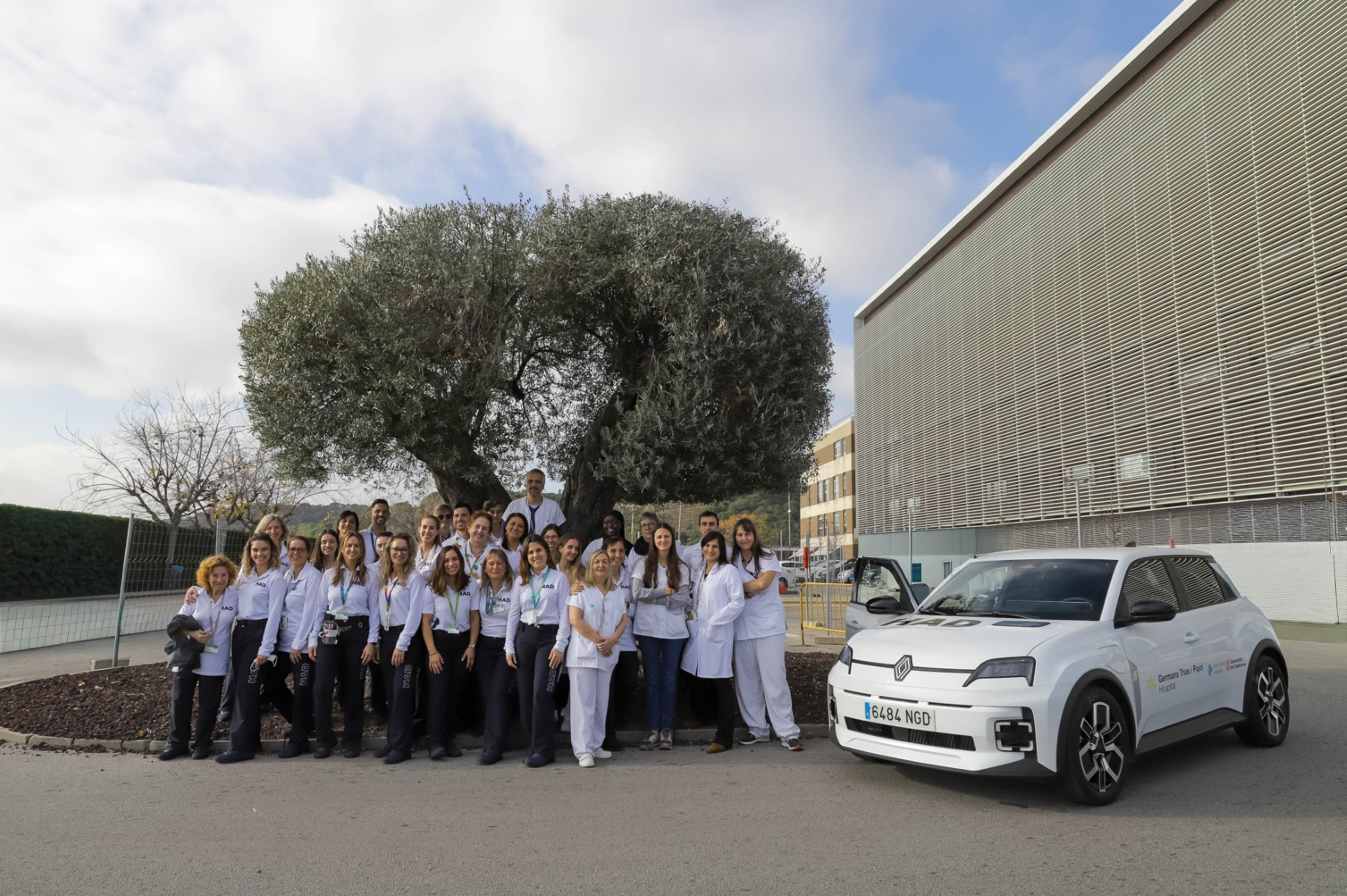
The care team is made up of professionals with expertise in different areas, such as complex chronic patients, infectious and respiratory diseases, heart failure, surgery, traumatology, nephrology, paediatrics, haematology and oncology, among others. It also has a specialist nursing team in neonatology. To enable home visits, the team has electric cars.
Alongside its clinical activity, the service conducts significant teaching and participates in research and innovation projects aimed at evaluating clinical outcomes, incorporating new technologies, and continuously improving the home hospitalisation model.
- The “Patient Journey Radar” project by Hospital Germans Trias wins the best communication on patient experience award at the SECA congress
- Hospital Germans Trias is now remotely monitoring more than a thousand complex patients using smartwatches
- The 1st edition of the Sons i Batecs Solidarity Music Festival raises over €7,000 for the Home Hospitalisation Unit at the Can Ruti Campus
Tipus Servei: 5
Correu: hospdomicili.germanstrias@gencat.cat
Docència:
Undergraduate teaching
It hosts students from the Nursing degree for clinical placements and works to expand its involvement in teaching the Medicine degree, with the aim of introducing future professionals to the home hospitalisation care model.
Postgraduate teaching
It participates in the training of resident doctors from various specialities. Currently, residents from the following specialities rotate through the department:
- Internal Medicine.
- Family and Community Medicine.
- Geriatrics.
During their placement, residents are integrated into the service's clinical work, participate in the assessment and follow-up of patients, and present a clinical case at the end of the rotation.
The service is developing a specific teaching manual and defining the learning objectives and competencies associated with the different areas of expertise.
Conitnuing education
It organises weekly accredited clinical sessions, in a face-to-face and online format, open to participation from other Home Hospitalisation units. Its professionals also regularly participate in multidisciplinary committees, continuing education courses and training placements at other centres.
In parallel, several members of the team are involved in teaching on master's degrees, postgraduate courses and other specialised training programmes related to home hospitalisation, internal medicine and the digital transformation of healthcare.
Medical Team
Glòria Bonet
Head of the service
Montserrat Bonet Farell
Associated doctor of the service (specialty Internal Medicine)
Ainhoa Vivero Larraza
Associated doctor of the service (specialty Internal Medicine)
Elena de Felipe Martín
Associated doctor of the service (specialty Internal Medicine)
Jordi Joseph Vilaplana
Associated doctor of the service (specialty Family and Community Medicine)
Cristina Ampurnales
Associated doctor of the service (specialty Family and Community Medicine. Specialist in Rehabilitation)
Claudia Thatiana Vertiz Guidotti
Associated doctor of the service (specialty Family and Community Medicine)
Anna Arjol Boga
Associated doctor of the service (specialty in Internal Medicine and Family and Community Medicine)
Ester Hoyos Alcañiz
Associated doctor of the service (specialty Geriatrics)
Eduard Estruch Par
Associated doctor of the service (specialty Family and Community Medicine)
Mercè Gil Bermejo
Associated doctor of the service (specialty Internal Medicine)
Agnes Hernández Biette
Associated doctor of the service (specialty Pneumhology)
Nursing team
Beatríz Díez Sánchez
Supervisor nurse
Maria Pons Barber
Valuation nurse
Cristina Pulvé Hernández
Digital nurse
- Visiting nurses:
Laura Navarrete Gonzalez
Lourdes Cereceda Valencoso
Irene Carrascosa Gimbert
Maria Isabel Montano Cano
Paula Mir Pidemont
Patricia Romero Candel
David Gonzalez Garcia
Noelia Fernandez Flores
Luis Corchete Luna
Mouna Halhoul
Judith Penco Llamas
Fiona Aranda Lamora
Laia Nonell Cano
Ana Parra Gonzalez
Sara Esbrí Gamez
Rosana Fernandez Ramirez
Leidy Johanna Ceron Garcia
Cristian Gonzalez Ruiz
Alicia Peinado Bedmar
Miriam Alvarez Lozano
Christine Graells Vicente
Rosa Maria Moreno Moreno
Nursing assistant
Administrative team
Mercè Terol Villaluenga
The Home Hospitalisation Service (HAD) is a form of hospitalisation that provides medical and nursing care of an intensity and complexity equivalent to that received during a conventional hospital stay, in the patient's own home. Throughout the care process, the patient remains an inpatient of the Hospital, which assumes responsibility and guarantees the quality and safety of the care. To be admitted to the unit, it is essential to have a designated carer at home.
The HAD at Hospital Germans Trias i Pujol has over 25 years of experience and serves the population of North Barcelonès and South Maresme. It has 70 virtual beds and provides assistance 24 hours a day, 365 days a year. It is made up of a multidisciplinary team of medical and nursing professionals. It cares for patients from virtually all medical and surgical specialities of the Hospital, in coordination with the Emergency Department, primary care and other healthcare services, to ensure comprehensive and continuous care.
The service operates through two admission modalities: early discharge for inpatients, which reduces the conventional length of stay, and avoidance of admission, aimed at patients referred from A&E, day hospitals, outpatient clinics or primary care.
The service has the same diagnostic and therapeutic capabilities as a conventional ward and can carry out various tests and procedures at home, such as blood tests, electrocardiograms or bedside ultrasound scans. In addition, it incorporates remote monitoring and telemedicine systems that help to enhance clinical safety and reduce unnecessary trips to the hospital.
The care team is made up of professionals with expertise in different areas, such as complex chronic patients, infectious and respiratory diseases, heart failure, surgery, traumatology, nephrology, paediatrics, haematology and oncology, among others. It also has a specialist nursing team in neonatology. To enable home visits, the team has electric cars.
Alongside its clinical activity, the service conducts significant teaching and participates in research and innovation projects aimed at evaluating clinical outcomes, incorporating new technologies, and continuously improving the home hospitalisation model.
- The “Patient Journey Radar” project by Hospital Germans Trias wins the best communication on patient experience award at the SECA congress
- Hospital Germans Trias is now remotely monitoring more than a thousand complex patients using smartwatches
- The 1st edition of the Sons i Batecs Solidarity Music Festival raises over €7,000 for the Home Hospitalisation Unit at the Can Ruti Campus
The Home Hospitalization service offers specialized care to patients with medical and surgical pathologies that can be treated at home with the same care guarantees as a conventional hospital admission.
Areas of expertise
- Infectious diseases
- Respiratory diseases
- Complex chronic disease Treatment of IC
- Surgical disease
- Total hip and knee prosthesis fast track
- Oncological sickness
- Haematological disease
- Nephrourological disease
- Paediatric patient care
- Neonatology
Assistance procedures and techniques at home
The unit carries out a wide portfolio of diagnostic, therapeutic and care procedures at home, including:
Management of treatments
- Antibiotic, antiviral and antifungal treatment by endovenous, intramuscular or subcutaneous pathway.
- Management of diuretics, analgesics, opioids and other specialized treatments.
- Enteral nutrition and parenteral nutrition.
Nursing care and techniques
- Placement, change and control of probes and probes.
- Change and control of drainage.
- Tracheostomy care.
- Visical washing and drainage.
- Care for simple and complex wounds.
- Negative pressure therapy (VAC and PICO).
- Removal of suture material.
- Health and therapeutic education, including education in insulin therapy.
Diagnostic tests and monitoring
- Analyses and collection of biological samples.
- Electrocardiogram.
- Clinical ultrasound at bed level.
- Remote biometrics and vital constant monitoring.
- Telemedicine.
Support for respiratory diseases
- Oxygen therapy.
- Aerosoltherapy.
- Control of non-invasive mechanical ventilation.
- Night pulsioxymetry.
- Night polygraph.
Specialized procedures
- Surgical debris of necrotic lesions.
- Evacuating paracentesis.
- Toracocentesi.
The Hospitalisation at Home service at Hospital Germans Trias i Pujol cares for patients from virtually all medical and surgical specialities. The majority present with a high degree of clinical complexity and multiple co-morbidities, which requires highly specialised, coordinated and personalised care.
It is a centre of excellence for the incorporation of new technologies applied to home hospitalisation. It has remote vital signs monitoring systems, telemedicine platforms and bedside clinical ultrasound, tools that help to improve patient safety, facilitate clinical monitoring and reduce trips to the hospital.
The main areas of specialisation are as follows:
- Infectious diseases and home intravenous antibiotic treatment
It is a centre of excellence for home intravenous antibiotic treatment (HITAT) and for the care of patients with respiratory, urinary, musculoskeletal, endovascular, intra-abdominal and central nervous system infections. This work is carried out in close coordination with the Infectious Diseases Service, the Day Hospital, outpatient clinics and primary care, ensuring continuity of care. In addition, it actively participates in the Antimicrobial Stewardship Programme (PROA) and in various multidisciplinary committees.
- Respiratory diseases
It provides specialist care for patients with complex respiratory disease, such as exacerbations of COPD, pneumonia or acute asthma. It also participates in the follow-up of patients requiring non-invasive mechanical ventilation, in coordination with the Department of Pulmonology.
- Complex Chronic Patient
Participates in the proPCC programme and develops comprehensive care for patients with complex chronicity and advanced illness. The approach includes comprehensive geriatric assessment, the development of an individualised care plan, and coordination with primary care and PADES teams when necessary.
- Heart Failure
Care for patients with heart failure is provided in coordination with the Heart Failure Unit, Internal Medicine, Geriatrics, A&E, and Primary Care. The incorporation of point-of-care clinical ultrasound helps to optimise monitoring and decision-making.
- Surgical patient
Collaboration with surgical services has enabled the progressive expansion of home care following various procedures. The unit is a pioneer in care pathways such as the treatment of jaundice and breast or bariatric surgery without a conventional hospital stay.
- Gastroenterology and Interventional Radiology
The unit works in conjunction with the Gastroenterology and Interventional Radiology services to facilitate direct discharge home after certain procedures, such as peroral endoscopic myotomy (POEM), endoscopic lesion resection, ERCP, hepatic radioembolisation (TARE) or prostatic embolisation, reducing hospital stay and promoting early recovery.
- Complex care
The nursing team is highly specialised in providing complex care, including difficult-to-heal wounds and negative pressure therapy.
- Orthopaedics and trauma
The unit participates in fast-track programmes following orthopaedic surgery, facilitating same-day discharge for certain patients undergoing hip or knee replacement, as well as for other selected trauma procedures.
- Nephrology and Urology
The unit cares for renal transplant patients, people on haemodialysis and other patients with complex nephrological or urological conditions, in coordination with the referral services.
- Oncology and Haematology
The follow-up of onco-haematology patients is carried out in close coordination with the Oncology and Haematology services, with regular meetings and shared protocols that ensure continuity of care and a rapid response to clinical needs.
- Emergency Service
The service maintains a direct coordination with the Emergency Service, which allows daily evaluation of patients susceptible to being admitted directly to the home, avoiding conventional hospitalizations as long as the clinical conditions allow it.
- Home Day Hospital
It develops activity recognized by CatSalut as a day hospital, administering at home endovenous substitute treatments for certain minority diseases, such as Fabry's disease.
The Home Hospitalisation Service at Germans Trias conducts extensive research and innovation aimed at evaluating the clinical outcomes of the care model, driving the digital transformation of home care, and incorporating new technologies to improve the quality, safety and efficiency of care.
Research is carried out in collaboration with professionals and institutions in the Can Ruti area, as well as with other hospitals and scientific societies at a national and international level.
Main research lines
The service participates in several research and innovation projects focused on:
- The validation of remote monitoring systems for in-home patients.
- The development of telemedicine tools applied to home hospitalisation.
- The evaluation of the clinical outcomes and cost-effectiveness of the care model.
- The incorporation of remote biometrics and data intelligence to improve patient monitoring.
- The care of patients with complex health needs in the home setting.
Projects in development
Projects currently in development include:
- Project SESHAT, funded by European funds, focused on the remote monitoring of inpatients at home using biometrics and on identifying predictive factors through data analysis.
- The REHOCA project, aimed at validating a remote monitoring device developed in collaboration with the Hospital's Innovation Directorate and the company ONALABS.
- Development of the eSalut platform, with the aim of expanding the use of telemedicine in home care.
- Study on the costs and efficiency of hospitalisation at home, linked to a doctoral thesis.
- Participation in the DOMICOM project, promoted by the Spanish Society of Hospitalisation at Home (SEHAD) and the Spanish Society of Internal Medicine (SEMI), focused on the care of patients with complex needs.
Scientific outputs
The unit's professionals continuously participate in multicentre studies and publish the results of their research in high-impact scientific journals, both nationally and internationally. Recent publications include papers on the digital transformation of home hospitalisation, the treatment of COVID-19, outpatient surgery with home follow-up, digestive endoscopy, and the economic evaluation of new care models.
Service's featured publications:
- Alemany A, Balanza N, Millat-Martinez P, Ouchi D, Corbacho-Monné M, Morales-Indiano C, Fernández Rivas G, Blanco I, Mitjà O, Aguilar R, Dobaño C, Bassat Q, Moncunill G, Baro B; COnV-ert BMK STUDY GROUP. Prognostic performance of early immune and endothelial activation markers in mild-to-moderate COVID-19 outpatients: a nested case-control study. Front Immunol. 2024 Nov 27;15:1501872. doi: 10.3389/fimmu.2024.1501872. PMID: 39664394; PMCID: PMC11631913.
- Anna Calm, Andrea Avella , Sofía Dall'Oglio , Raquel Muñoz-González , Maria Gloria Bonet, Claudia Thatiana Vertiz , Mónica Rodríguez , Adria Escudero , Enrique Moret , Anna Pèlach , Luis Wong , Eugeni Domènech , Vicente Moreno , Ingrid Marín , Hugo Uchima . Evaluation of adverse events following endoscopic peroral myotomy (POEM) for achalasia ‒ Implications for feasibility of same-day discharge Rev Esp Enferm Dig.2025 sep 29. DOI: 10.17235/reed.2025.11535/2025
-
Albert Caballero, Jordi Tarascó, Pau Moreno, Laura López-Vendrell, Sílvia Pellitero, Eva Martínez Glòria Bonet, José María Balibrea Implementación de un programa de cirugía bariátrica sin ingreso hospitalario y seguimiento con plataforma de telemonitorización. DOI: 10.1016/j.ciresp.2023.07.002
-
Sánchez, B. D., Delgado-Capel, M., Echeverria-Bermúdez, P., & Bonet-Papell, G. (2021). Reestructuración del funcionamiento de la Unidad de Hospitalización a Domicilio del Hospital Universitario Germans Trias i Pujol para el manejo de pacientes COVID y no COVID ingresados durante la pandemia del COVID-19 en España. Hospital a Domicilio, 5(1), 29–42. https://doi.org/10.22585/hospdomic.v5i1.123
Undergraduate teaching
It hosts students from the Nursing degree for clinical placements and works to expand its involvement in teaching the Medicine degree, with the aim of introducing future professionals to the home hospitalisation care model.
Postgraduate teaching
It participates in the training of resident doctors from various specialities. Currently, residents from the following specialities rotate through the department:
- Internal Medicine.
- Family and Community Medicine.
- Geriatrics.
During their placement, residents are integrated into the service's clinical work, participate in the assessment and follow-up of patients, and present a clinical case at the end of the rotation.
The service is developing a specific teaching manual and defining the learning objectives and competencies associated with the different areas of expertise.
Conitnuing education
It organises weekly accredited clinical sessions, in a face-to-face and online format, open to participation from other Home Hospitalisation units. Its professionals also regularly participate in multidisciplinary committees, continuing education courses and training placements at other centres.
In parallel, several members of the team are involved in teaching on master's degrees, postgraduate courses and other specialised training programmes related to home hospitalisation, internal medicine and the digital transformation of healthcare.
Contacte: hospdomicili.germanstrias@gencat.cat